




Assess first, then build the strategy
The surest way to a governance programme that works is to understand the organisation before designing the strategy. BluEnt runs a structured, consultant-led readiness assessment that identifies governance gaps, operational risks and data quality challenges, then builds a strategy and framework shaped by the organisation’s regulatory obligations, data environment and structure.
Legal advice on privacy or regulation is not included; it stays with the organisation’s counsel.
- Current stateGaps, risks and maturity
- Governance visionCharter and priorities
- FrameworkPolicies, standards, owners
- RoadmapQuick wins, then the long term
Strategy and readiness in brief
 Who it serves
- Chief data officers, governance leads, CIOs, risk and compliance leaders, and data owners
 What it covers
- Readiness assessment, governance vision and charter, framework design, operating model and roadmap
 How it is assessed
- By consultants with delivery experience, not a self-assessment questionnaire
 Independence
- BluEnt does not resell governance platforms; recommendations follow the organisation’s needs
 How it starts
- A Governance Readiness Assessment

Why governance programmes stall
Governance often starts with a tool, and the strategy arrives afterwards, if at all.
Without a strategy, catalogues fill up with untagged data and policies never reach daily work.
A governance strategy answers why governance matters and where the organisation is going. The framework answers how it will work in practice. Both depend on an honest picture of where the organisation stands today.
- Tools before strategyA catalogue deployed with no classification framework to guide it.
- Unclear ownershipNobody accountable for the data each domain depends on.
- Unmapped obligationsRegulations that are not tied to any named control.
- No baselineNo measure of where governance stands, so no way to show progress.
What the assessment examines
A structured review of people, process, technology and data, with findings the organisation can act on.
| Area | What is examined |
|---|---|
| Data maturity | How data is managed, documented and used today |
| Technology landscape | The platforms, tools and data flows across the estate |
| Gaps and risks | Where governance is missing, and the operational and regulatory risk that creates |
| Stakeholders | Interviews with the people who own, use and depend on the data |
| Data quality | Where quality problems start and how they are handled |
| AI readiness | Whether data is governed well enough for AI and analytics |
From assessment to a working framework
Four stages, each producing deliverables the organisation keeps and uses.
Select a stage to explore
Assess
Discovery and current-state assessment
A consultant-led review of where governance stands, built from evidence rather than self-scoring.
- Data maturity assessment
- Technology landscape mapping
- Governance gaps and risks
- Stakeholder interviews and data flow documentation
Plan
Strategy and roadmap
A governance vision the business agrees with, and a sequence for getting there.
- Governance vision and charter
- Governance operating model
- Enterprise data domains and ownership
- Quick wins and a long-term roadmap
Design
Governance framework design
Not a single document, but a set of coordinated components that define how governance works in practice.
- Policies and standards
- Roles and accountability
- Classification framework
- Regulatory obligations mapped to controls
Prepare
Readiness for AI and regulation
Governance shaped around what is coming next: AI use, audit and changing regulation.
- AI and analytics data readiness
- Controls mapped by jurisdiction and domain
- Evidence for audit and regulators
- Priorities for remediation
The foundations of governance strategy
Four foundations that every strategy has to settle before governance can work day to day.
- People and ownershipDomains, owners, stewards and sponsors
- Policies and standardsRules written down and applied
- Data and technologyQuality, platforms and data flows
- Regulation and AIObligations mapped, AI prepared for
From first interview to an agreed roadmap
A sequence designed to produce a framework the organisation can put to work.
Discover
Stakeholders are interviewed, and the data, platforms and flows are documented.
Assess
Maturity is measured across each dimension, and gaps and risks are prioritised.
Define
The governance vision, charter, operating model and ownership are agreed.
Roadmap
Quick wins and the long-term plan are sequenced, with measures of progress.

Governance by tool, or governance by strategy
Where it starts
Governance by tool: With a platform purchase
Governance by strategy: With an assessment of needs
Ownership
Governance by tool: Assumed
Governance by strategy: Named by domain
Regulation
Governance by tool: Handled case by case
Governance by strategy: Mapped to controls
Progress
Governance by tool: Hard to show
Governance by strategy: Measured against a baseline
Why partner with BluEnt
Consultant-led and independent: assessors bring delivery experience in the industries and platforms they evaluate, and because BluEnt does not resell governance platforms, recommendations follow the organisation’s obligations, data and structure.
- Consultant-ledEvidence, not a questionnaire
- IndependentNo platforms to resell
- Regulation-awareObligations mapped to controls
- Usable deliverablesNot internal working papers
- AI-readyGovernance for what comes next
About our clients
- A mid-sized AEC firm: an information and data audit and governance framework, ahead of Microsoft Copilot. Read the case study →
- Gearbox and Epic: reconciled finance and gift-card data, with reporting the finance teams rely on.
- WellSky: analytics and reporting on governed healthcare data.
- HFS: unified research data in client and admin dashboards.

Delivery model and security
Offices in the US, Canada, the UK, the Netherlands and India. How delivery works.
SOC 2 Type I and Type II attestations held. Security & SOC 2.
Related links
Strategy and readiness come first in enterprise data governance. They set up the operating model, data quality, catalogues and adoption that follow.
Insights
Perspectives from BluEnt on governance strategy.
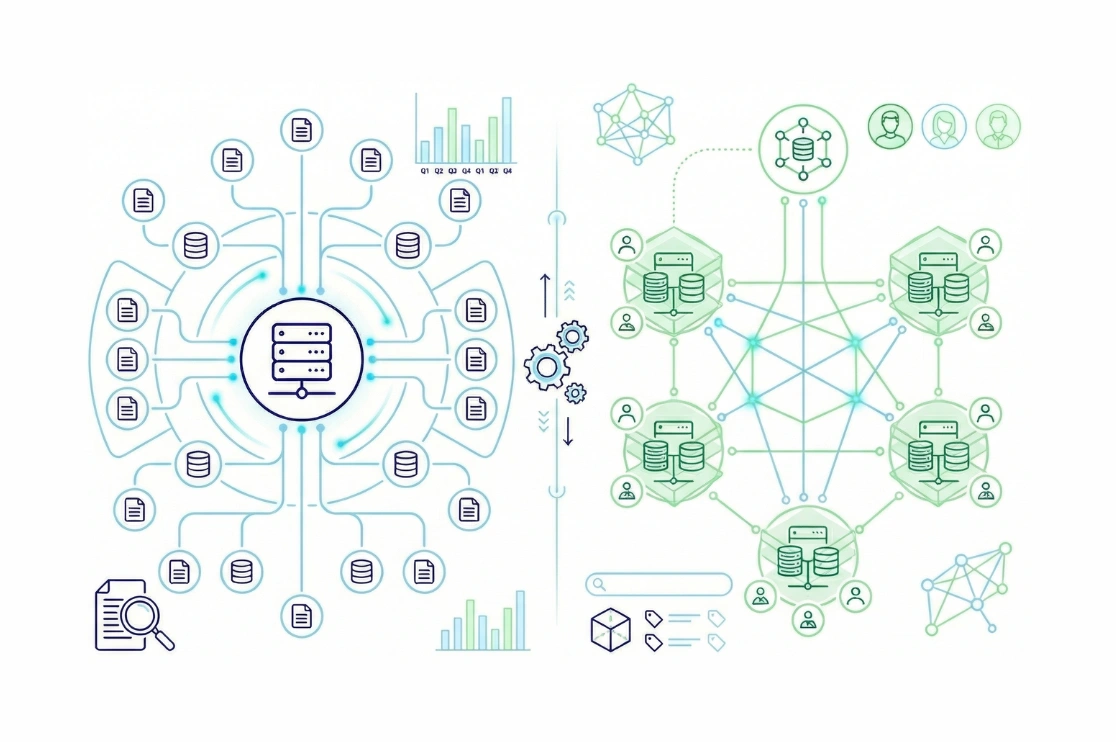 InsightCentralised, federated or hybrid governanceWhich governance model fits the organisation.Read the article
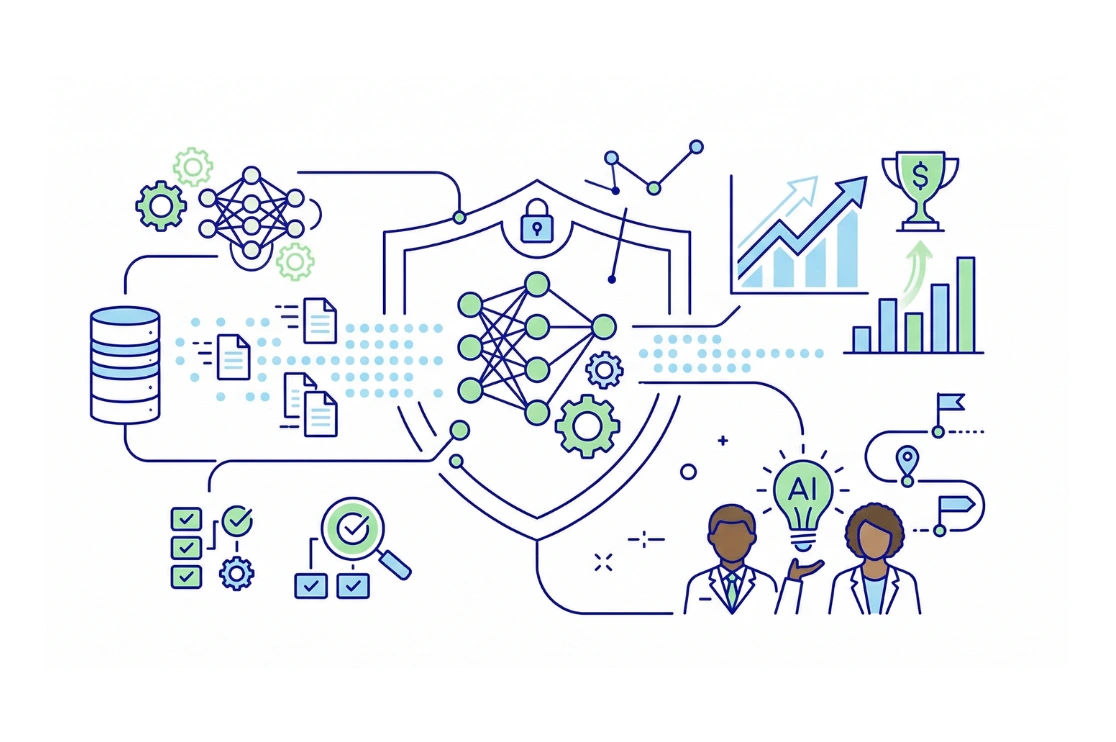 InsightData governance for AI and advanced analyticsBuilding a governance foundation that works for AI.Read the article
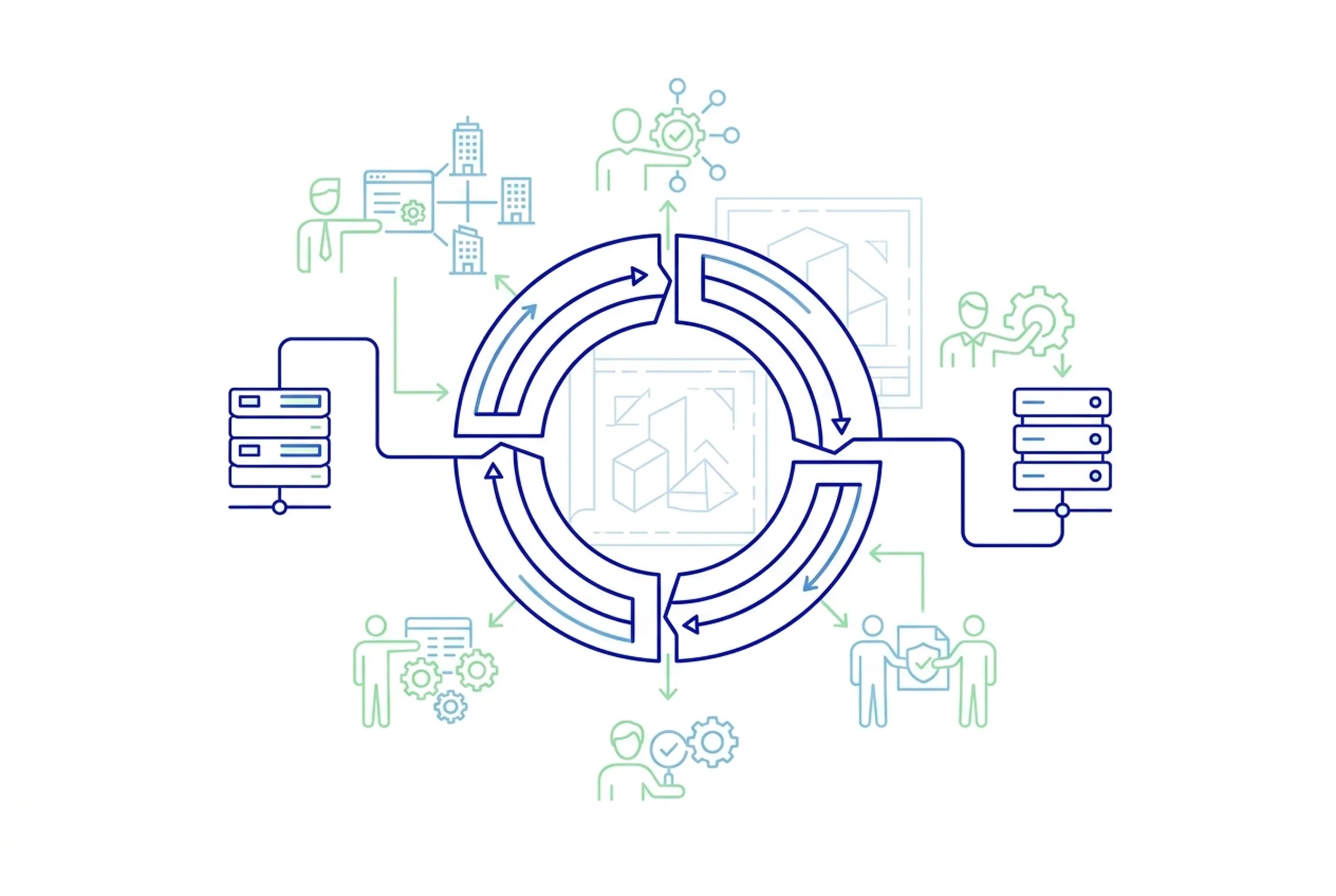 InsightData governance roles in AEC organisationsWho owns what, and how responsibilities are shared.Read the article
Questions data leaders ask

What is the difference between a governance strategy and a framework?
The strategy answers why governance matters and where the organisation is going. The framework answers how it will work in practice: policies, standards, roles and controls.
How is this different from a self-assessment?
A consultant-led assessment is built from evidence, interviews and documentation, and its findings can support audit and regulatory conversations.
Does BluEnt recommend a particular governance platform?
No. BluEnt does not resell governance platforms, so recommendations follow the organisation’s obligations, data and structure.
What does the assessment produce?
A defined set of deliverables: current-state findings, prioritised gaps and risks, a governance vision and charter, and a roadmap.
Does it cover AI readiness?
Yes. Whether data is governed well enough for AI and analytics is one of the dimensions examined.
How does a governance strategy and readiness engagement start?
With a Governance Readiness Assessment.
Is there an AEC version of this assessment?
For architecture, engineering and construction firms, see the AI-Readiness Assessment.
"*" indicates required fields
Your information is used only to reply to this enquiry and is never shared outside BluEnt. Privacy policy
