


Data trust is an executive priority
Every decision, report and AI model depends on data the business can trust. Data quality programmes that run as one-off clean-ups do not last. BluEnt moves organisations from data quality programmes to trust engineering: quality designed into the architecture, monitored continuously, owned by named people and reported to executives, so trust can be measured rather than assumed.
- Raw dataFrom every source system
- Rules and checksQuality built in
- Monitored continuouslyIssues caught early
- Trusted decisionsMeasured and visible
Data trust in brief
 Who it serves
- Chief data officers, governance leads, data owners, data engineers and executives who rely on reporting
 What it covers
- Quality architecture, observability and monitoring, accountability, lineage and trust metrics
 Measures
- Accuracy, completeness, consistency, timeliness, validity and uniqueness
 Approach
- Assess, define, engineer and monitor, then report and improve
 How it starts
- A Data Trust Engineering Consultation, or the Data Governance Maturity Assessment

From quality programmes to trust engineering
Most organisations do not have a data quality problem. They have a data trust problem.
Clean-up projects fix today’s errors, and the same errors return next quarter.
Trust comes from engineering: quality rules applied where data is created and moved, monitoring that catches issues before reports do, clear accountability for fixing them, and metrics that show executives how reliable the data is.
- One-off clean-upsErrors fixed once, and back again within months.
- Silent failuresProblems found in board reports rather than at the source.
- No ownerNobody accountable for fixing the data that fails.
- Trust by assumptionNo measure of how reliable the data really is.
What trust engineering delivers
Reliable data at scale, with business impact the organisation can see.
| Capability | What it delivers |
|---|---|
| Quality by design | Rules applied where data is created, moved and transformed |
| Continuous monitoring | Observability that catches issues before they reach reports |
| Clear accountability | Named owners who resolve quality issues in their domains |
| Traceability | Lineage that shows where a bad value came from |
| Executive visibility | Trust scorecards that show reliability by domain |
| AI-ready data | Data reliable enough to train and run AI models |
The data trust engineering framework
Five areas that together make data quality last.
Select an area to explore
Design
Enterprise data quality architecture
Quality designed into the data platform, not added afterwards.
- Rules at ingestion and transformation
- Reference and master data standards
- Validation built into pipelines
- Quality zones in the data platform
Monitor
Data observability and continuous monitoring
Issues detected as they happen, rather than discovered in a report.
- Freshness, volume and schema monitoring
- Anomaly detection
- Alerts routed to the right owner
- Incident tracking and resolution
Own
Data quality assurance and accountability
Named owners and stewards who resolve issues within agreed thresholds.
- Ownership by data domain
- Quality thresholds agreed with the business
- Issue workflows and escalation
- Root-cause analysis
Trace
Data lineage and traceability
Every value traceable to its source, so the cause of a problem can be found and fixed.
- Source-to-report lineage
- Impact analysis for changes
- Evidence for audit and regulators
- Links to the data catalog
Show
Data trust metrics and executive visibility
Reliability made visible, so leaders know how far they can trust each report.
- Trust scorecards by domain
- Quality trends over time
- Business impact of quality issues
- Reporting for executives and boards
Trust, made visible to every audience
Each group sees the measures it needs to act on.
- ExecutivesTrust scorecards and business impact
- Data ownersQuality by domain, against thresholds
- Data engineersObservability alerts and incidents
- Auditors and regulatorsLineage and evidence of control
From the first assessment to trust that is measured
A methodology that builds quality into the platform and keeps it there.
Assess
Quality and trust are measured across critical data, and the costliest issues are found.
Define
Quality rules, thresholds and owners are agreed for each data domain.
Engineer and monitor
Rules are built into pipelines, and observability catches issues as they happen.
Report and improve
Trust metrics are reported to executives, and root causes are fixed at the source.

Cleaned once, or trusted every day
When issues are found
Cleaned once: In the board report
Trusted every day: At the source, as they happen
Who fixes them
Cleaned once: Whoever notices
Trusted every day: The named owner
How trust is shown
Cleaned once: By reputation
Trusted every day: With measured scorecards
What AI is trained on
Cleaned once: Data nobody has checked
Trusted every day: Data with known quality
Why partner with BluEnt
Trust engineering needs governance, engineering and business understanding together. BluEnt brings all three, building quality into the platform, ownership into the organisation and trust metrics into executive reporting.
- Quality by designBuilt into the platform
- Continuous monitoringIssues caught early
- Clear accountabilityNamed owners for quality
- TraceableLineage to the source
- Measured trustScorecards for leaders
About our clients
- Gearbox and Epic: gift-card transactions validated against several sources before partner statements are produced.
- WellSky: reporting automation on governed healthcare data in Tableau and SQL Server.
- HFS: unified research data behind accurate client and admin dashboards.

Delivery model and security
Offices in the US, Canada, the UK, the Netherlands and India. How delivery works.
SOC 2 Type I and Type II attestations held. Security & SOC 2.
Related links
Data quality and trust are part of enterprise data governance. They rely on catalogues and lineage, an operating model with named owners, and a governance strategy to set priorities.
Insights
Perspectives from BluEnt on data quality and governance.
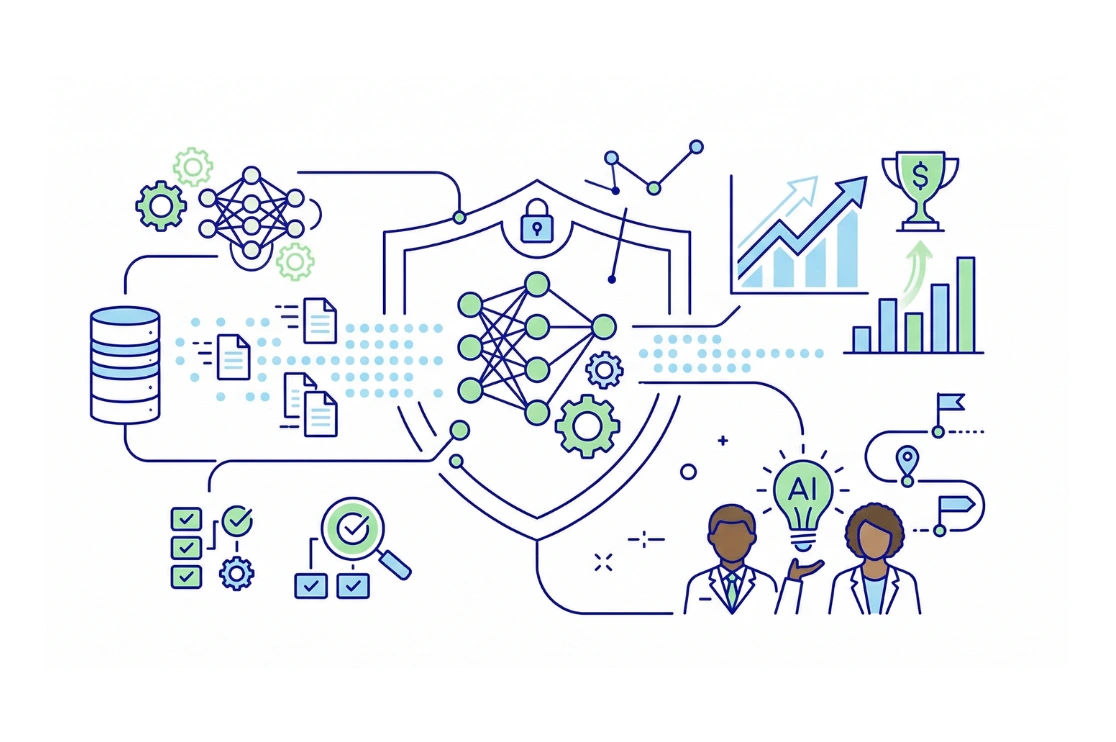 InsightData governance for AI and advanced analyticsBuilding a governance foundation that works for AI.Read the article
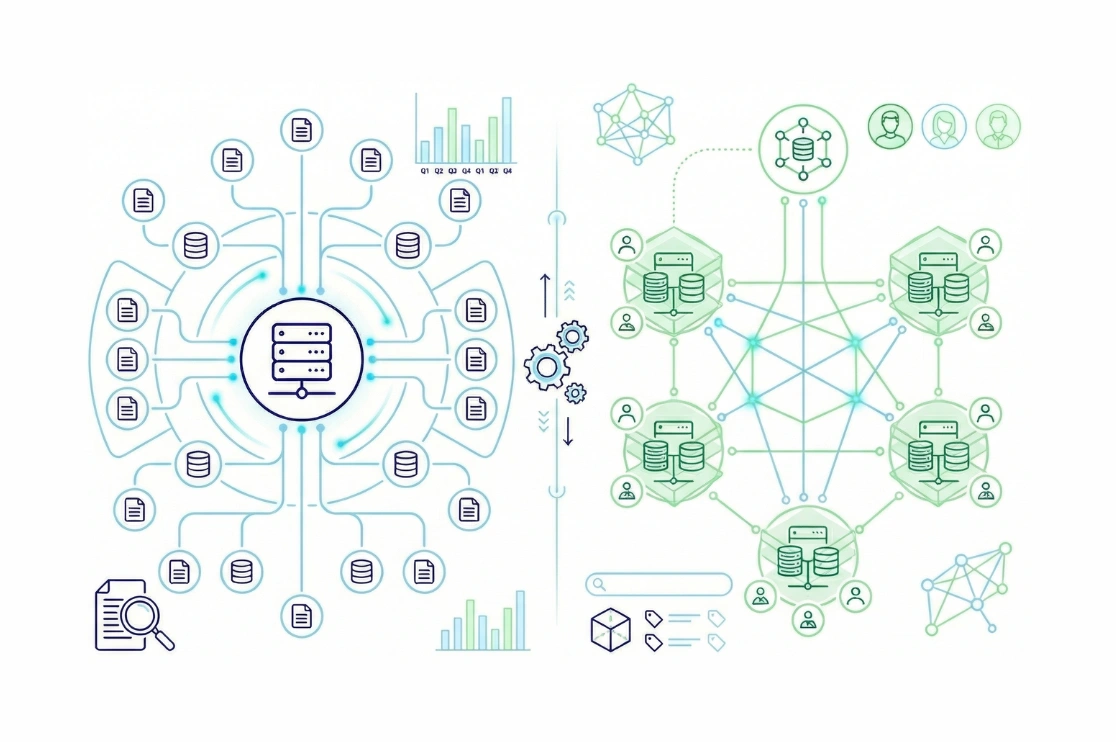 InsightCentralised, federated or hybrid governanceWhich governance model fits the organisation.Read the article
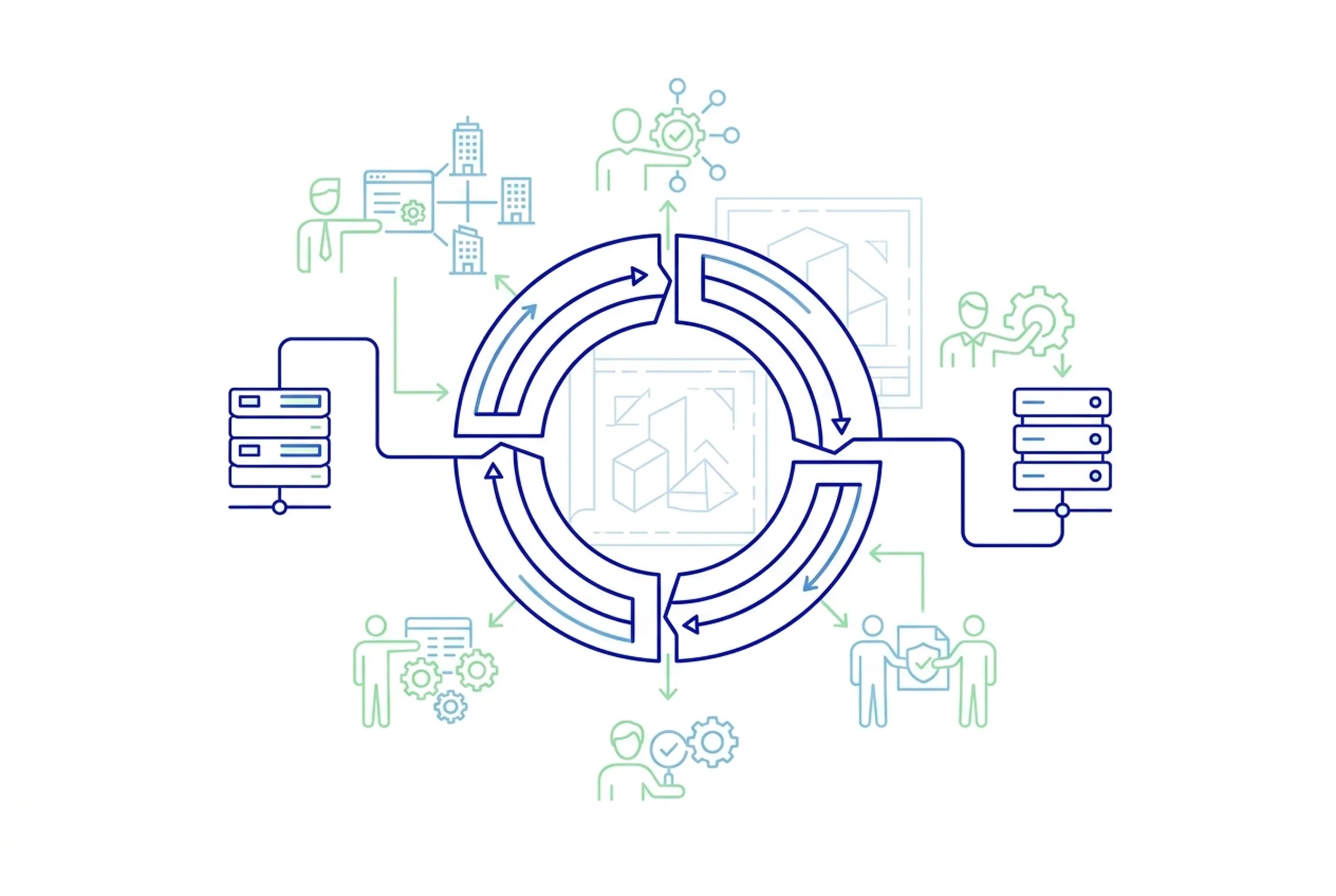 InsightData governance roles in AEC organisationsWho owns what, and how responsibilities are shared.Read the article
Questions data leaders ask

Why is data quality critical for decision-making?
Because every report, forecast and AI model inherits the quality of the data behind it. Poor data leads to poor decisions, however good the analysis.
How does trust engineering improve reliability at scale?
By building quality rules into pipelines, monitoring data continuously and assigning owners, so quality holds as data volumes grow.
What business risks come from poor data quality?
Wrong decisions, regulatory exposure, wasted effort reconciling reports, and AI models that learn from errors.
How can data quality be measured?
Against dimensions such as accuracy, completeness, consistency, timeliness, validity and uniqueness, reported as trust scorecards by domain.
How does data quality support AI?
AI models are only as reliable as their training data. Known, measured quality is the foundation for AI that can be trusted.
Where does data quality and trust engineering work usually begin?
With a Data Trust Engineering Consultation, or the Data Governance Maturity Assessment.
"*" indicates required fields
Your information is used only to reply to this enquiry and is never shared outside BluEnt. Privacy policy