


Parametric millwork automation replaces the part-by-part rebuild of every job with rules.
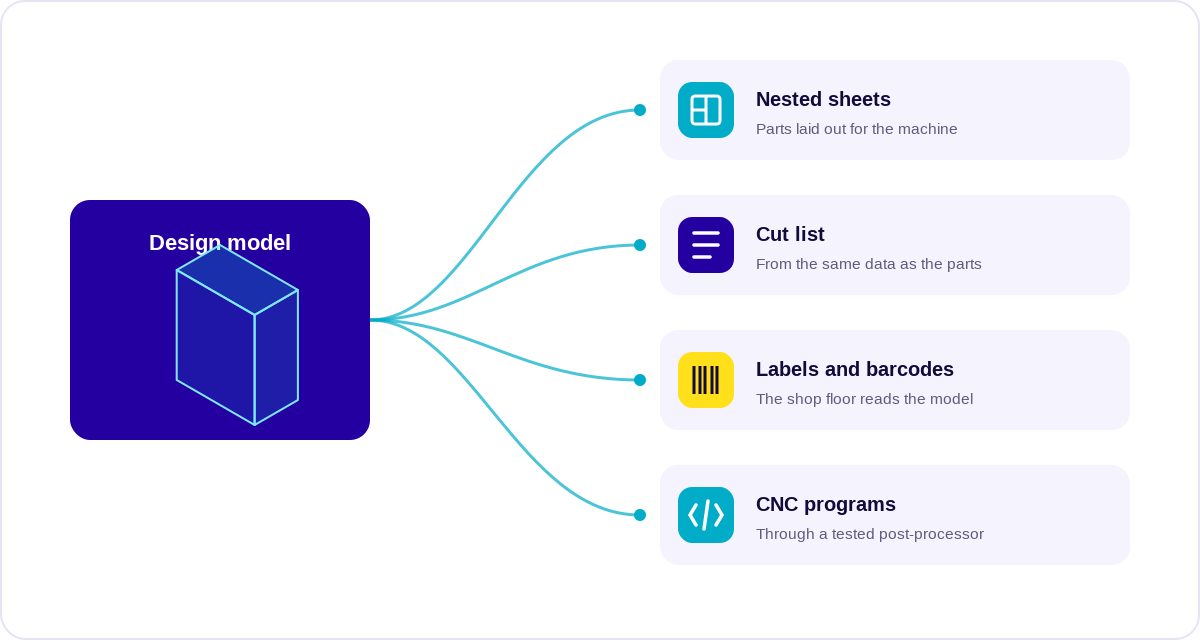
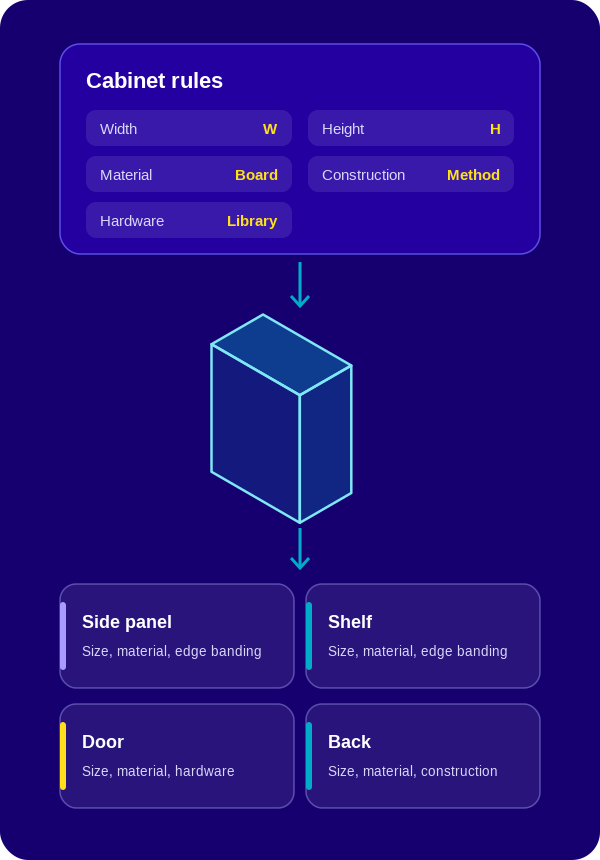
A cabinet or casework run is defined once, by its construction rules, and its parts, nesting, labels and machine programs are generated from the model.
At a glance
 Who it is for
- Millwork and casework fabricators and specialty contractors: operations directors, engineering managers and owners
 Inputs
- The firm's design models, construction standards, material and hardware libraries, and sample jobs
 Outputs
- Parametric part rules, nesting, cut lists, labels, CNC programs and an exception report
 Who is responsible
- BluEnt specifies, builds and tests. The firm approves the construction rules and the test results
 Engagement shape
- A build with named outputs, agreed in writing before work begins

Where the time goes on every job
On most jobs, the same cabinet is rebuilt by hand.
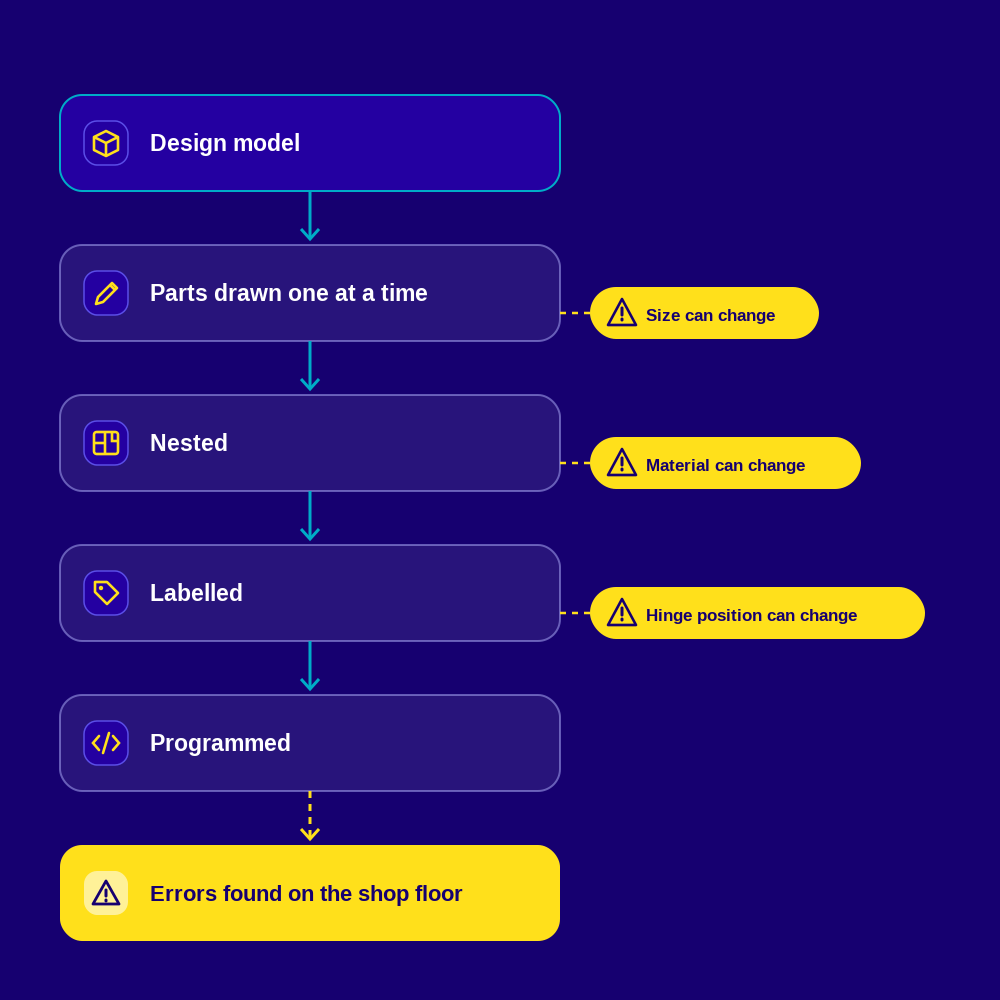
Construction rules live in experienced people's heads. Parts are drawn one at a time, then nested, labelled and programmed in separate steps.
Each step repeats the last one's data. Every manual step is a place where a size, a material or a hinge position can change on its way to the machine.
What parametric millwork automation produces
Every output comes from the same model data, so what is designed is what reaches the machine.
| Output | What it does |
|---|---|
| Parametric part and assembly rules | Cabinets and casework built from construction rules, not drawn part by part |
| Material and hardware assignment | Board, edge banding and hardware applied from the firm's own libraries |
| Nesting | Parts laid out on sheets from the model, ready for the machine |
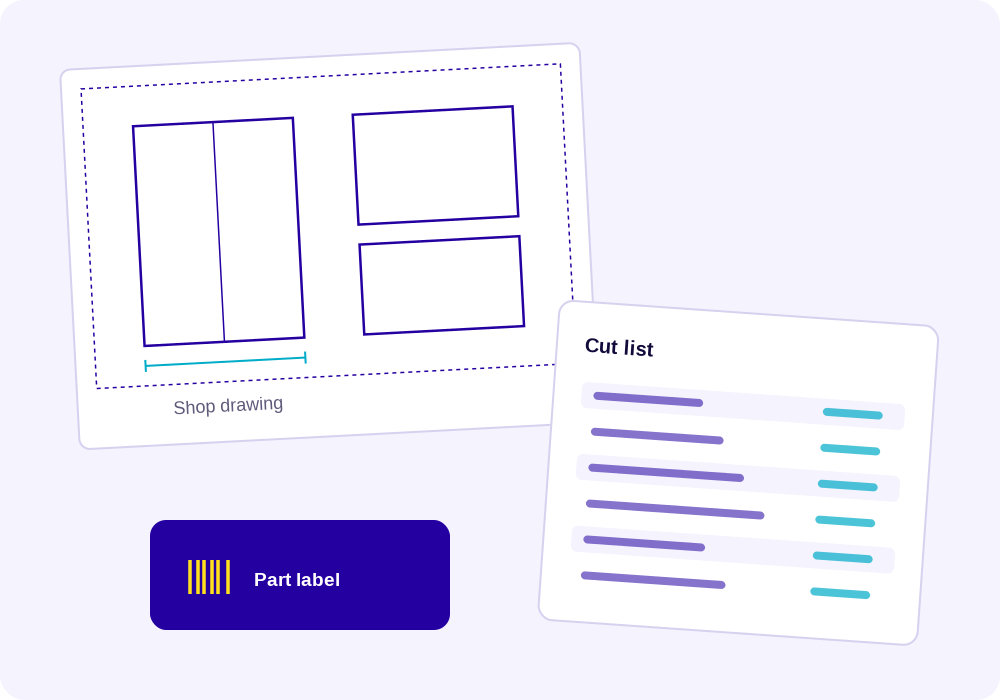
| Cut lists | Generated from the same data as the parts |
| Part labels and barcodes | Printed from the model, so the shop floor reads what was designed |
| CNC programs | Passed through a post-processor configured and tested on the shop's machines |
| Exception report | Any part that fails a rule is listed with the reason, not passed to the machine |
How the work runs
From the firm's own construction rules to a tested handover the firm can maintain.
Capture the construction rules
Sizes, joinery, materials and hardware, written down with the firm's production lead.
Agree the rules
BluEnt drafts them; the firm approves them.
Build
The parametric parts, nesting and output logic.
Test on sample jobs
Including a dry run on the firm's machines, with every exception resolved together with the firm's team.
Hand over
With documentation of the rules and how to maintain them.

Rebuilt for each job, or generated from rules
Where construction knowledge lives
Rebuilt for each job: In experienced people
Generated from rules: In agreed, documented rules
What a new job needs
Rebuilt for each job: The same drawing, again
Generated from rules: New dimensions and options only
How parts reach the machine
Rebuilt for each job: Through several manual steps
Generated from rules: From the model, through one checked route
Where errors are caught
Rebuilt for each job: Often on the shop floor
Generated from rules: In the exception report, before cutting
Built on production depth
BluEnt produces shop drawings, cut lists and machine-ready output for millwork and casework shops today, through its millwork shop drawings practice. The rules automated here come from that production knowledge, not from a generic template.
What this does not cover
- Revit add-in development, Autodesk Platform Services and Design Automation API work are not part of this service.
- CNC machine hardware, controller servicing and operator training are not included.
Drawing production is delivered through bluentcad.com, not through this service.

Delivery model and security
Offices in the US, Canada, the UK, the Netherlands and India. How delivery works.
SOC 2 Type I and Type II attestations held. Security & SOC 2.
Questions AEC professionals ask
Which software does this work with?
Cabinet Vision and Microvellum on the fabrication side, with design models from Revit or Inventor. Naming a product describes the work; it is not a partnership claim.
Can the rules handle non-standard pieces?
The rules cover the firm's standard construction. Pieces outside the rules are flagged in the exception report, so they are handled deliberately rather than slipping through.
Will this change how the shop floor works?
The output the shop floor uses, sheets, cut lists and labels, keeps its familiar form. What changes is where it comes from: the model, through one checked route.
What does the firm need to provide?
Design models, construction standards, material and hardware libraries, and a set of sample jobs, plus one person who can approve the construction rules.
"*" indicates required fields
Your information is used only to reply to this enquiry and is never shared outside BluEnt. Privacy policy