




Ownership, stewardship and accountability, at every level
A governance strategy only works when someone is accountable for carrying it out. BluEnt designs governance operating models that establish clear ownership, activate stewardship and enforce accountability across the data estate, treating the work as an organisational transformation, so governance is applied whenever data is created, used and changed.
- Governance strategyWhat the organisation wants
- Roles and ownershipWho decides and who acts
- Embedded processesGovernance in daily work
- Accountable dataBetter decisions, lower risk
Operating models in brief
 Who it serves
- Chief data officers, governance leads, data owners, stewards and the executives who sponsor them
 What it covers
- Operating model design, roles and stewardship, process integration and technology alignment
 Model types
- Centralised, federated or hybrid, chosen for the organisation’s structure and regulation
 Structure
- A governance council, data owners and data stewards, with clear escalation paths
 How it starts
- A conversation about how governance runs today, and where accountability breaks down

Why governance stays on paper
Many organisations have governance policies, and few have anyone who acts on them every day.
Without an operating model, accountability is assumed rather than assigned.
An operating model turns strategy into clear accountability, ownership and execution. It works when governance processes fit into existing business workflows, rather than sitting beside them as extra work.
- No clear ownersNobody accountable when data in a domain goes wrong.
- Passive stewardshipStewards named on paper, with no time or authority to act.
- Processes on the sideGovernance treated as extra work outside normal workflows.
- No escalationCross-domain issues that are never resolved.
What the operating model defines
The components that make governance run in practice, not only on paper.
| Component | What it defines |
|---|---|
| Decision rights | Who may set or change policies, definitions, standards and thresholds |
| Roles | Council, owners, stewards and custodians, each with a clear scope |
| Processes | Governance steps built into how data is created, used and changed |
| Escalation paths | How issues move from domain to council when they cannot be solved locally |
| Metrics | Measures that show whether governance is working |
| Technology alignment | Governance tools and data platforms that automate and show the work |
Centralised, federated or hybrid
The right model depends on the organisation’s structure, regulatory complexity and strategic priorities.
Select a model to compare
One team
A centralised model
One central team sets and enforces governance for the whole organisation.
- Consistent standards everywhere
- Clear, single accountability
- Suited to smaller or highly regulated organisations
- Can slow down as demand grows
Many domains
A federated model
Domains govern their own data within shared enterprise standards.
- Ownership close to the data
- Scales across large organisations
- Needs strong shared standards
- Relies on capable domain teams
Both
A hybrid model
A central council sets standards and resolves conflicts, while domains own and steward their data.
- Central standards, local ownership
- Clear escalation to the council
- Balances consistency and speed
- A common enterprise choice
The roles that make governance work
Each tier works within its scope, with a clear path between them.
- Governance councilSets enterprise standards and resolves escalations
- Data ownersAccountable for data in each domain
- Data stewardsApply governance to data every day
- Custodians and consumersRun the platforms and confirm the data works
From design to governance that keeps running
Four stages across the operating model lifecycle.
Design the model
Structures are designed around the organisation’s governance needs, regulation and priorities.
Assign the roles
Owners and stewards are named and embedded in business operations, with real authority.
Integrate the processes
Governance steps are built into existing workflows, with escalation paths agreed.
Align the technology
Governance tools and platforms are aligned, and metrics track how governance performs.

Governance on paper, or governance in operation
Accountability
Governance on paper: Assumed
Governance in operation: Assigned to named roles
Stewardship
Governance on paper: A title, without time
Governance in operation: Part of the job
Cross-domain issues
Governance on paper: Left unresolved
Governance in operation: Escalated and settled
Proof it works
Governance on paper: Anecdotal
Governance in operation: Measured
Why partner with BluEnt
Operating models need both strategic advice and hands-on implementation experience. BluEnt brings both, designing structures that fit the organisation and putting them to work in its processes and platforms.
- Strategy and deliveryAdvice and implementation
- People firstRoles with real authority
- Built into workflowsGovernance as daily work
- Technology alignedAutomation and visibility
- MeasuredMetrics for governance
About our clients
- HFS: HubSpot and Asana integration, with automated workflows and unified research data.
- WellSky: governed healthcare data behind Tableau reporting.
- Gearbox and Epic: finance and gift-card data with clear ownership for monthly reporting.

Delivery model and security
Offices in the US, Canada, the UK, the Netherlands and India. How delivery works.
SOC 2 Type I and Type II attestations held. Security & SOC 2.
Related links
The operating model puts enterprise data governance into practice. It follows the governance strategy, supports data quality and catalogues, and depends on data adoption.
Insights
Perspectives from BluEnt on governance models and roles.
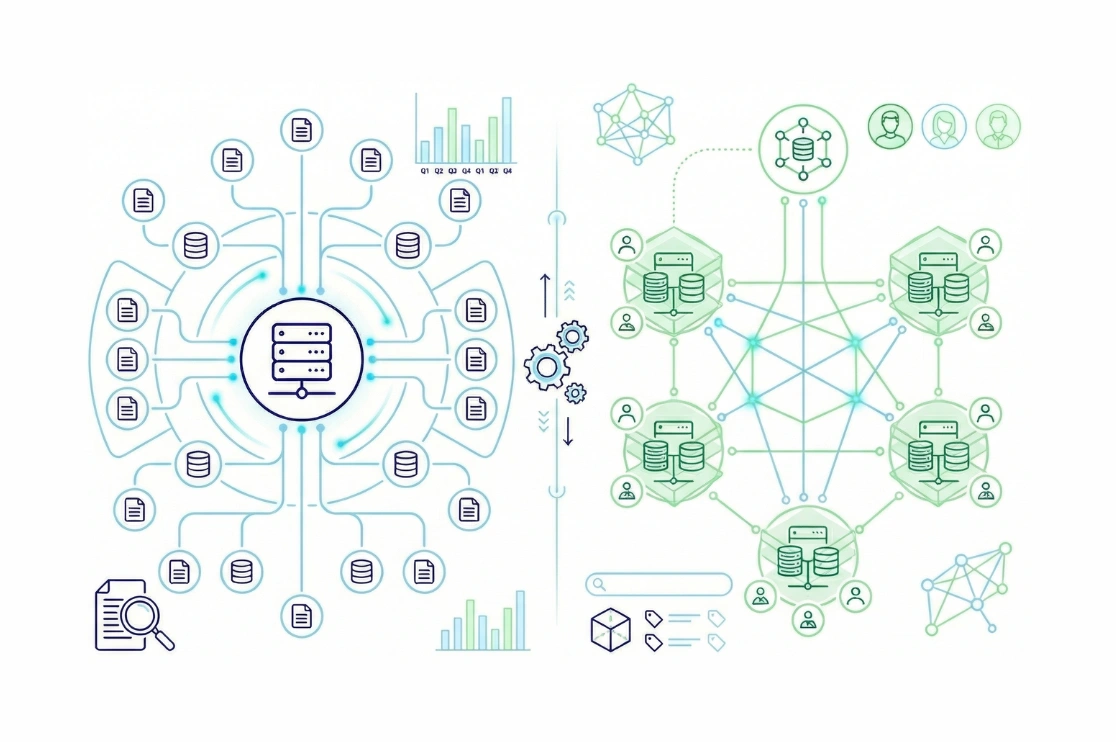 InsightCentralised, federated or hybrid governanceWhich governance model fits the organisation.Read the article
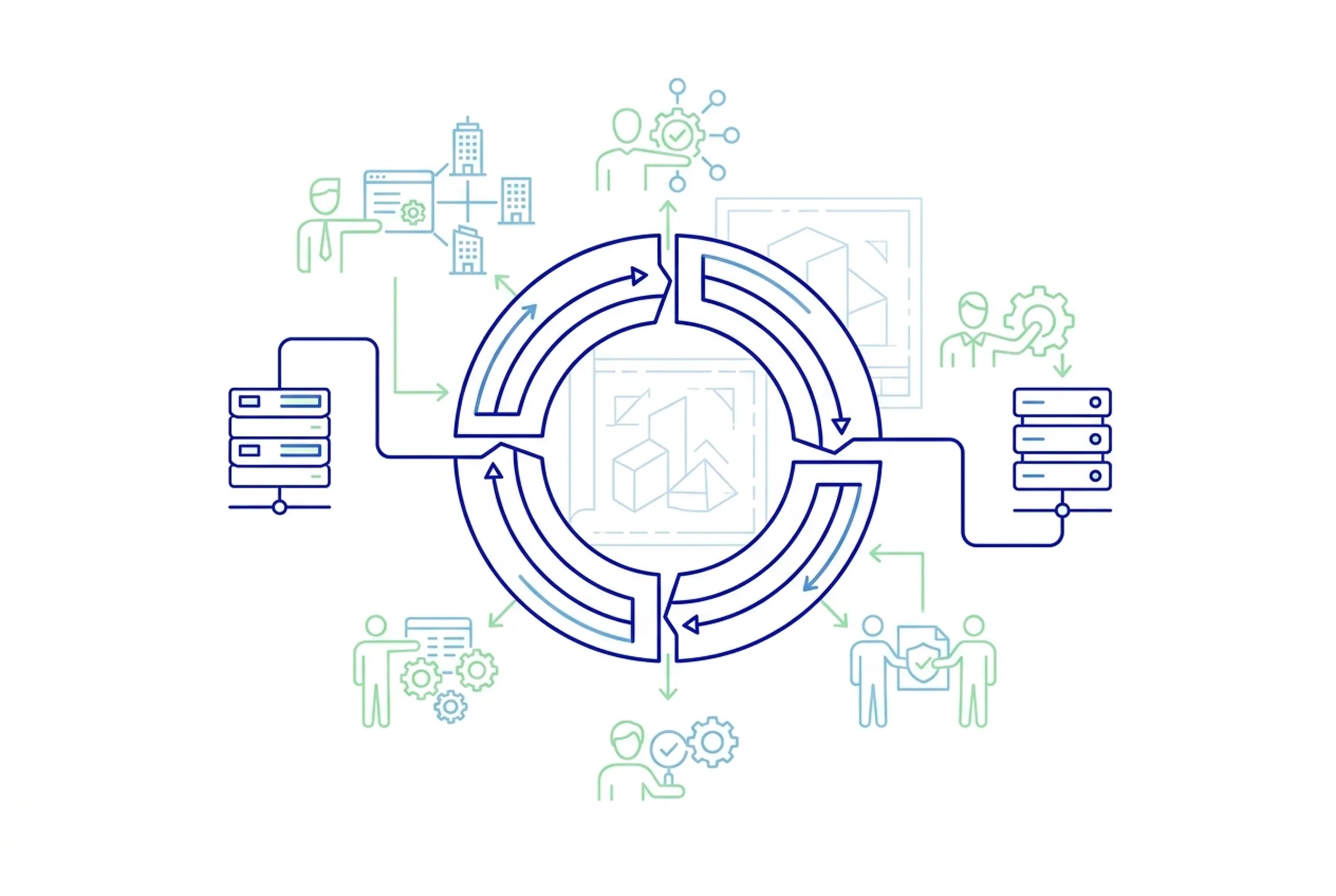 InsightData governance roles in AEC organisationsWho owns what, and how responsibilities are shared.Read the article
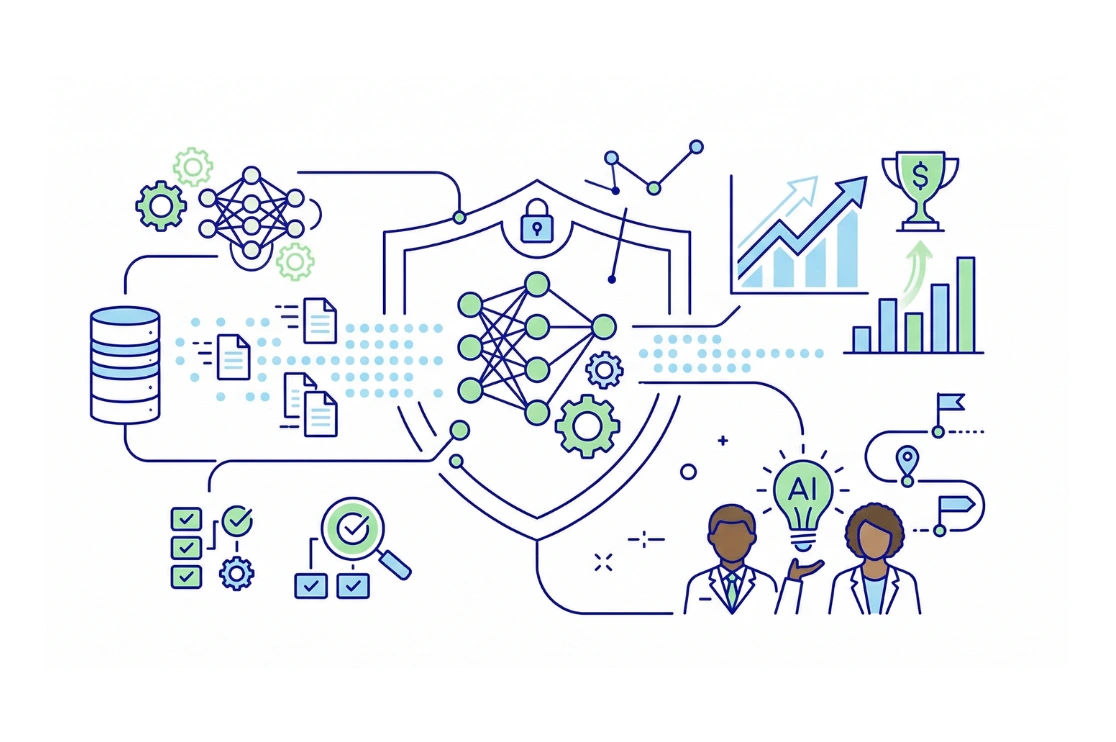 InsightData governance for AI and advanced analyticsBuilding a governance foundation that works for AI.Read the article
Questions data leaders ask

Why is a governance operating model important?
It turns strategy into clear accountability, ownership and execution, so governance happens in daily work rather than only in documents.
Which model is right: centralised, federated or hybrid?
It depends on the organisation’s size, structure and regulation. Many enterprises choose a hybrid: central standards with domain ownership.
What is the role of a governance council?
It sets enterprise standards, resolves conflicts between domains and handles escalations that cannot be settled locally.
How are stewards made effective?
By embedding the role in business operations, with time and authority to act, and processes that fit existing workflows.
How is the operating model measured?
With metrics agreed at the start, tracking ownership coverage, issue resolution and the health of governed data.
What is the first step in governance operating models?
With a conversation about how governance runs today and where accountability breaks down.
"*" indicates required fields
Your information is used only to reply to this enquiry and is never shared outside BluEnt. Privacy policy
