


A fully discoverable, governed and trusted data estate
Most organisations do not lack data infrastructure. They lack an understanding of what data exists, where it lives, how it moves and whether it can be trusted. BluEnt implements enterprise data catalog, lineage and metadata management frameworks that turn fragmented data ecosystems into transparent, governed and highly usable data environments.
- Fragmented assetsScattered across systems
- Metadata harvestedCaptured automatically
- One enterprise catalogSearchable, with lineage
- Trusted dataFound, understood, governed
Catalog and lineage in brief
 Who it serves
- Chief data officers, data governance leads, data stewards, analytics teams and data engineers
 What it covers
- Enterprise data catalogs, end-to-end lineage, automated metadata harvesting, glossaries and metadata governance
 Tools
- Microsoft Purview, Apache Atlas, Collibra and platform-native catalogs
 Approach
- Assessment, design, implementation, adoption and continuous improvement
 How it starts
- A conversation about data discovery, lineage or metadata challenges

Data without visibility
When nobody can see what data exists or where it came from, every report is a question mark.
Analysts spend their time searching, and still cannot be sure what they have found is right.
A catalog on its own is only a tool. Metadata management is the discipline that keeps it accurate and useful: harvested automatically, governed by clear ownership and connected to lineage, so people can find data and trust it.
- Hard to findAnalysts spend hours searching for the right dataset.
- Unclear originsNobody can trace where a number in a report came from.
- Risky changesA change upstream breaks reports nobody knew depended on it.
- Stale documentationDefinitions that were accurate once, and never updated.
What the implementation delivers
Metadata governance frameworks aligned with the enterprise data governance strategy.
| Capability | What it delivers |
|---|---|
| Enterprise data catalog | One searchable inventory of data assets, so discovery takes less time |
| End-to-end lineage | Data traced from source to dashboard, with upstream and downstream dependencies |
| Automated harvesting | Metadata captured continuously from enterprise systems |
| Business glossary | Agreed business definitions linked to the data they describe |
| Ownership and stewardship | A named owner and steward for each critical data asset |
| Impact analysis | Every change checked against the reports and models it affects |
Five areas of the implementation framework
A framework that gives the organisation enterprise-wide metadata governance capabilities.
Select an area to explore
Discover
Enterprise data catalog implementation
A catalog that makes data assets easy to find, understand and request, so analytics teams spend less time searching.
- Searchable inventory of data assets
- Business and technical metadata together
- Access requests through the catalog
- Usage insight for each asset
Trace
End-to-end data lineage
Lineage that shows how data moves and transforms, from source systems to the dashboards and models that use it.
- Source-to-dashboard tracing
- Upstream and downstream dependencies
- Impact analysis before changes
- Lineage for regulatory reporting
Automate
Automated metadata harvesting
Frameworks that capture metadata from enterprise systems continuously, rather than by hand.
- Continuous metadata synchronisation
- Automated registration of data assets
- Coverage across databases, pipelines and clouds
- Staleness monitored over time
Define
Business glossary and definitions
Agreed definitions linked to the data, so every team means the same thing by the same term.
- Business terms and definitions
- Links from terms to data assets
- Approval workflows for new terms
- Classification of sensitive data
Govern
Metadata governance and stewardship
Ownership and processes that keep the catalog accurate long after launch.
- Named owners and stewards
- Metadata quality standards
- Measured completeness and accuracy
- Alignment with the governance strategy
Metadata from every corner of the estate
Catalogs are only as good as the metadata they hold, so it is harvested from every major source.
- Databases and warehousesSnowflake, Databricks, SQL Server and other platforms
- Pipelines and ETLTransformations that move and reshape data
- BI and reportsPower BI, Tableau and the dashboards people use
- Business glossaryDefinitions, owners and classifications
Product names show the platforms BluEnt works with. They do not indicate a formal partnership.
From scattered assets to a catalog people trust
A structured method for catalog, lineage and metadata governance.
Assess
Current data assets, metadata sources and discovery problems are reviewed with the people who use the data.
Design
The catalog model, glossary, ownership and lineage approach are designed with the governance strategy.
Implement
The catalog is deployed, metadata harvesting automated and lineage connected.
Adopt and improve
Stewards and users are onboarded, and completeness, accuracy and staleness are measured.

Searching for data, or finding it with confidence
How data is found
Searching for data: By asking around
Finding it with confidence: Through a searchable catalog
Where a number came from
Searching for data: Unknown
Finding it with confidence: Traced through lineage
Before a change
Searching for data: Hope nothing breaks
Finding it with confidence: Impact checked first
Metadata quality
Searching for data: Stale and incomplete
Finding it with confidence: Harvested and measured
Why partner with BluEnt
Catalog and lineage work designed around governance, not only tooling: frameworks that align cataloguing, lineage visibility and metadata management with the enterprise strategy, and stay accurate once they are live.
- Governance-firstAligned with strategy
- Automated metadataHarvested, not typed
- End-to-end lineageSource to dashboard
- Stewardship built inNamed owners for data
- Measured qualityCompleteness and staleness
About our clients
- WellSky: analytics and dashboards on Tableau, Microsoft SQL Server and SSIS, where lineage from source to report matters.
- HFS: data sources unified into client and admin dashboards.
- Gearbox and Epic: reconciled finance and gift-card data used in monthly reporting.

Delivery model and security
Offices in the US, Canada, the UK, the Netherlands and India. How delivery works.
SOC 2 Type I and Type II attestations held. Security & SOC 2.
Related links
Catalog and lineage are part of enterprise data governance. They depend on a governance strategy and operating model, support data quality, and make data adoption possible.
Insights
Perspectives from BluEnt on metadata and governance.
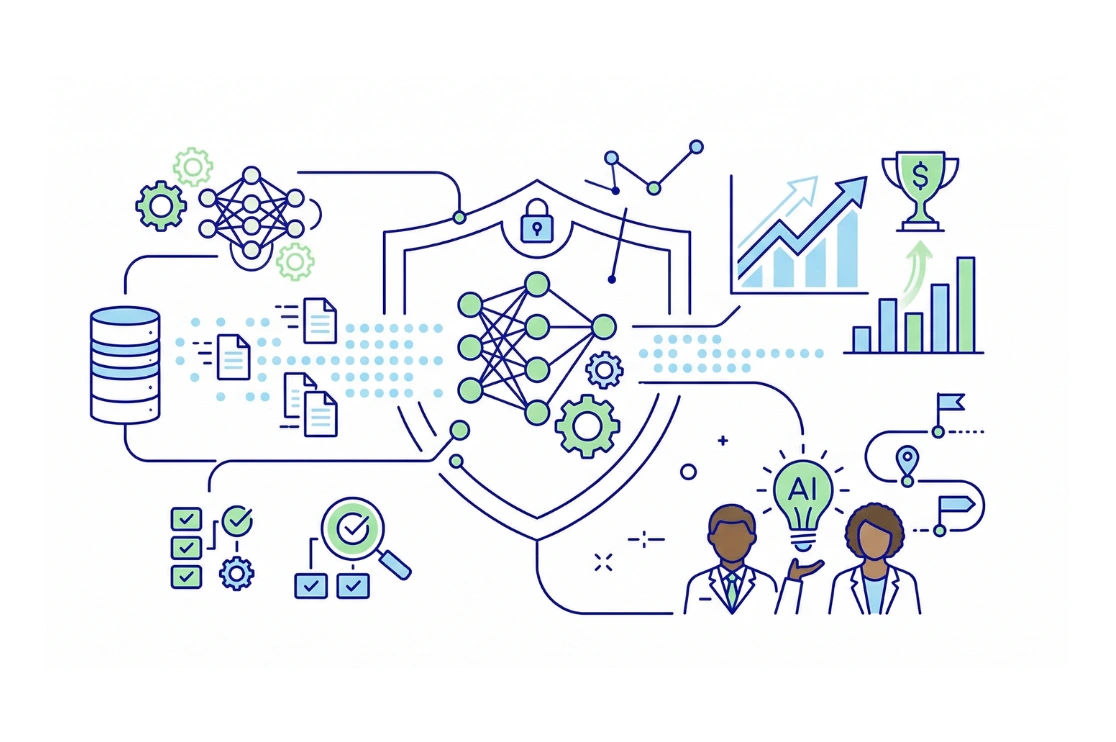 InsightEnterprise metadata management strategyMaking data findable, trustworthy and ready to use.Read the article
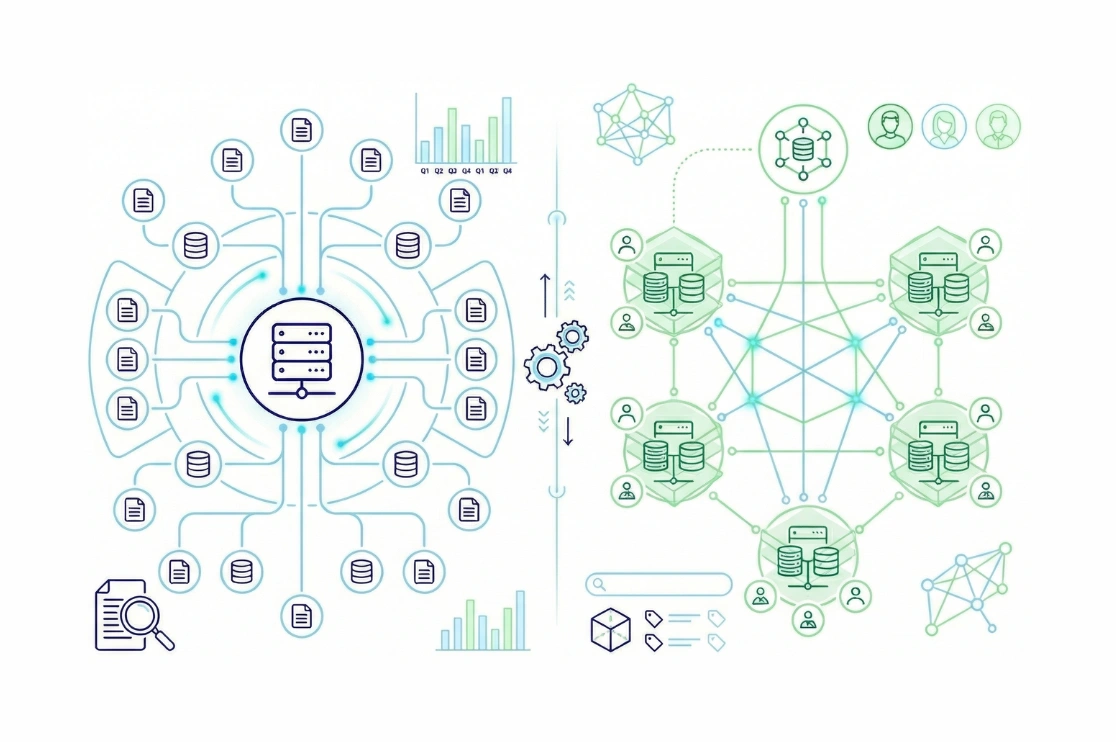 InsightCentralised, federated or hybrid governanceWhich governance model fits the organisation.Read the article InsightData governance for AI and advanced analyticsBuilding a governance foundation that works for AI.Read the article
Questions data leaders ask
What is the difference between a data catalog and metadata management?
A catalog is a tool. Metadata management is the discipline that keeps it accurate and useful, through automated harvesting, ownership and measured quality.
What does data lineage show?
Where data came from, how it was transformed, and which reports and models depend on it, from source system to dashboard.
Which catalog tools are used?
Microsoft Purview, Apache Atlas, Collibra or platform-native catalogs, chosen to fit the organisation’s estate.
How is metadata kept up to date?
By harvesting it automatically from enterprise systems, and by measuring completeness, accuracy and staleness over time.
Who owns the catalog once it is live?
Named owners and stewards for critical data assets, supported by the governance operating model.
Where does data catalog, lineage and metadata work usually begin?
With a conversation about where discovery, lineage or metadata are causing problems today.
"*" indicates required fields
Your information is used only to reply to this enquiry and is never shared outside BluEnt. Privacy policy