


Data culture is what makes data initiatives succeed
A data-driven organisation is not defined by how much data it stores or the technology it runs, but by how consistently data is used in decisions. BluEnt helps enterprises build lasting data-driven cultures, where employees in every department engage with trusted data for strategic and operational decisions, so data investments turn into measurable business outcomes.
- Data investmentPlatforms, governance, analytics
- People engagedLiteracy and ownership
- Trusted data in useIn daily workflows
- Measurable valueDecisions at every level
Adoption in brief
 Who it serves
- Chief data officers, data governance leads, heads of analytics, CIOs and business leaders
 What it covers
- Data literacy, governance participation, data access and usability, and leadership alignment
 Tools
- Business-friendly analytics in Tableau and Microsoft Power BI, with enterprise data catalogues. Naming a product describes the work; it is not a partnership claim.
 Approach
- Assessment, strategy, training, change management and continuous measurement
 How it starts
- A Data Adoption Strategy Consultation, or a data culture readiness review

The hidden challenge of data transformation
Many enterprises invest heavily in data platforms, governance and analytics, yet struggle to see the value.
The real challenge is adoption: employees keep turning to spreadsheets, traditional decisions and fragmented sources.
Technology alone does not change how people work. Without awareness, trust, training and clear ownership, even a well-built platform goes unused and governance stays a compliance exercise.
- Limited awarenessTeams do not know what data exists or how it can help them.
- Lack of trustPeople rely on their own spreadsheets rather than enterprise data.
- Insufficient trainingData literacy too low to interpret and act on analytics.
- Unclear ownershipNobody accountable for the data each team depends on.
What a strong data culture looks like
The difference shows in daily behaviour, not in the technology stack.
| With a strong culture | Without one |
|---|---|
| Leaders prioritise evidence-based decisions | Decisions rest on intuition and seniority |
| Employees trust enterprise data | Teams keep their own versions in spreadsheets |
| Governance is part of daily work | Governance is seen as a compliance chore |
| Teams share data definitions | Business metrics are interpreted differently |
| Enterprise platforms are well used | Investments sit underused |
| Data owners take part in governance | Participation is limited and passive |
The four pillars of data adoption
A framework designed to accelerate adoption and build a data culture that lasts.
Select a pillar to explore
Skills
Data literacy and skills development
The most common barrier to adoption is limited data literacy. Structured programmes help employees use data confidently in their roles.
- Analytics interpretation workshops
- Governance awareness programmes
- Hands-on training on enterprise analytics platforms
- Data fundamentals for business users
Ownership
Governance participation enablement
Governance struggles when it is seen as compliance. Engagement strategies bring data owners, stewards and stakeholders into it actively.
- Governance participation frameworks
- Clearly defined stewardship roles
- Incentives that encourage accountability
- Training for governance stakeholders
Access
Data access and usability
Even sophisticated platforms fail when users cannot find or understand the data. Usability is designed in from the start.
- Business-friendly analytics interfaces
- Documentation written for business users
- Simpler discovery through data catalogues
- Standard business metrics and definitions
Leadership
Leadership alignment and communication
Leaders set the tone. Working with executive teams puts data-driven thinking into organisational priorities.
- Executive data strategy workshops
- Enterprise-wide data communication
- Governance leadership councils
- Data-driven performance metrics
Adoption involves every part of the business
Cross-functional engagement, so data becomes part of how each group works.
- Executive leadersVision, sponsorship and leading by example
- Data owners and stewardsAccountability for quality and definitions
- Business usersConfident, everyday use of trusted data
- Data and analytics teamsPlatforms, catalogues and usable dashboards
Five stages to a lasting data culture
A structured method that embeds data-driven practice across the workforce.
Assess the culture
Current levels of data literacy, governance participation and analytics adoption are evaluated.
Design the strategy
A roadmap for enterprise-wide adoption is developed with the business.
Train and enable
Programmes build data literacy and governance awareness, role by role.
Integrate with governance
Governance frameworks and change management are aligned with adoption goals.
Measure and improve
Adoption metrics are tracked, and the strategy is refined to sustain engagement.

Data available, or data actually used
Where decisions come from
Data available: Spreadsheets and instinct
Data actually used: Trusted enterprise data
How governance is seen
Data available: A compliance exercise
Data actually used: Part of daily work
Who uses analytics
Data available: A few specialists
Data actually used: People in every department
What the investment returns
Data available: Underused platforms
Data actually used: Measurable outcomes
Why partner with BluEnt
Building a data culture takes expertise across governance, analytics and organisational change. BluEnt bridges the gap between technology investment and business value by helping employees use data effectively in their roles, with outcomes that are measured.
- Adoption frameworksStructured and repeatable
- Culture programmesLiteracy to leadership
- Governance-ledOwnership built in
- Cross-functionalEvery department involved
- MeasurableAdoption metrics and KPIs
About our clients
- HFS: data analytics and dashboards, with HubSpot automation and integration.
- WellSky: analytics and dashboards in Tableau, Microsoft SQL Server and SSIS.
- Gearbox and Epic: reporting and analytics used by finance teams every month.

Delivery model and security
Offices in the US, Canada, the UK, the Netherlands and India. How delivery works.
SOC 2 Type I and Type II attestations held. Security & SOC 2.
Related links
Adoption is one part of enterprise data governance. It works alongside a governance strategy and operating model, catalogues that make data easy to find, and data quality that earns trust.
Insights
Perspectives from BluEnt on data governance and culture.
 InsightData governance for AI and advanced analyticsBuilding a governance foundation that works for AI.Read the article
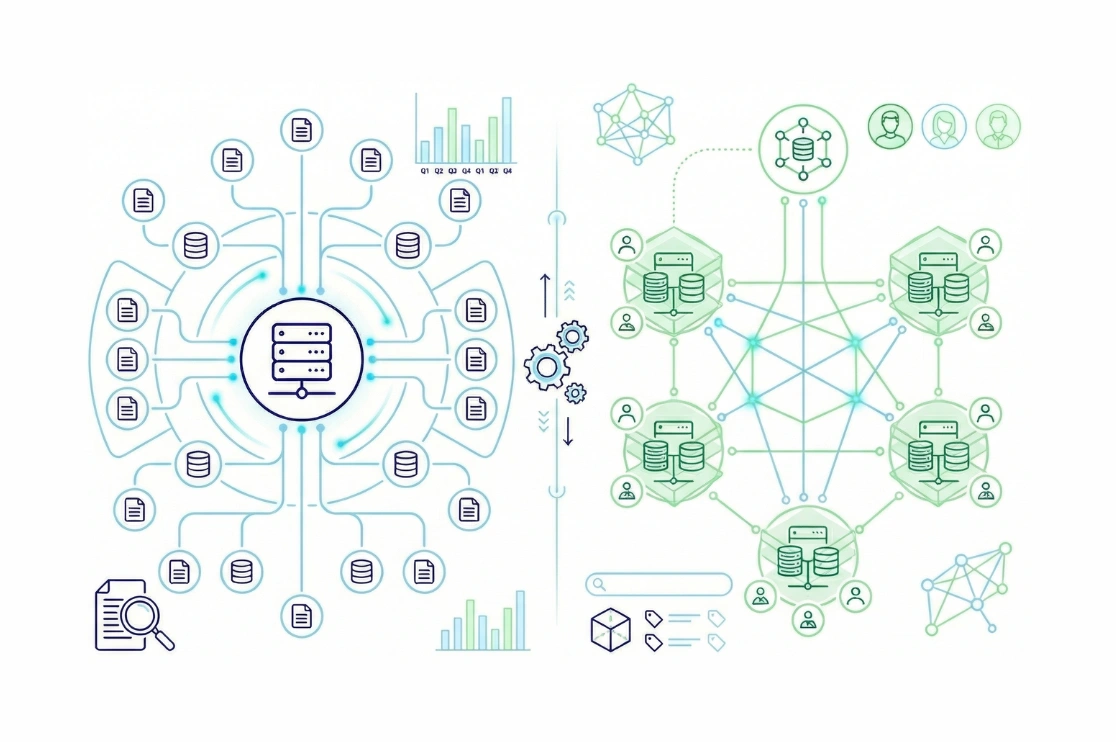 InsightCentralised, federated or hybrid governanceWhich governance model fits the organisation.Read the article
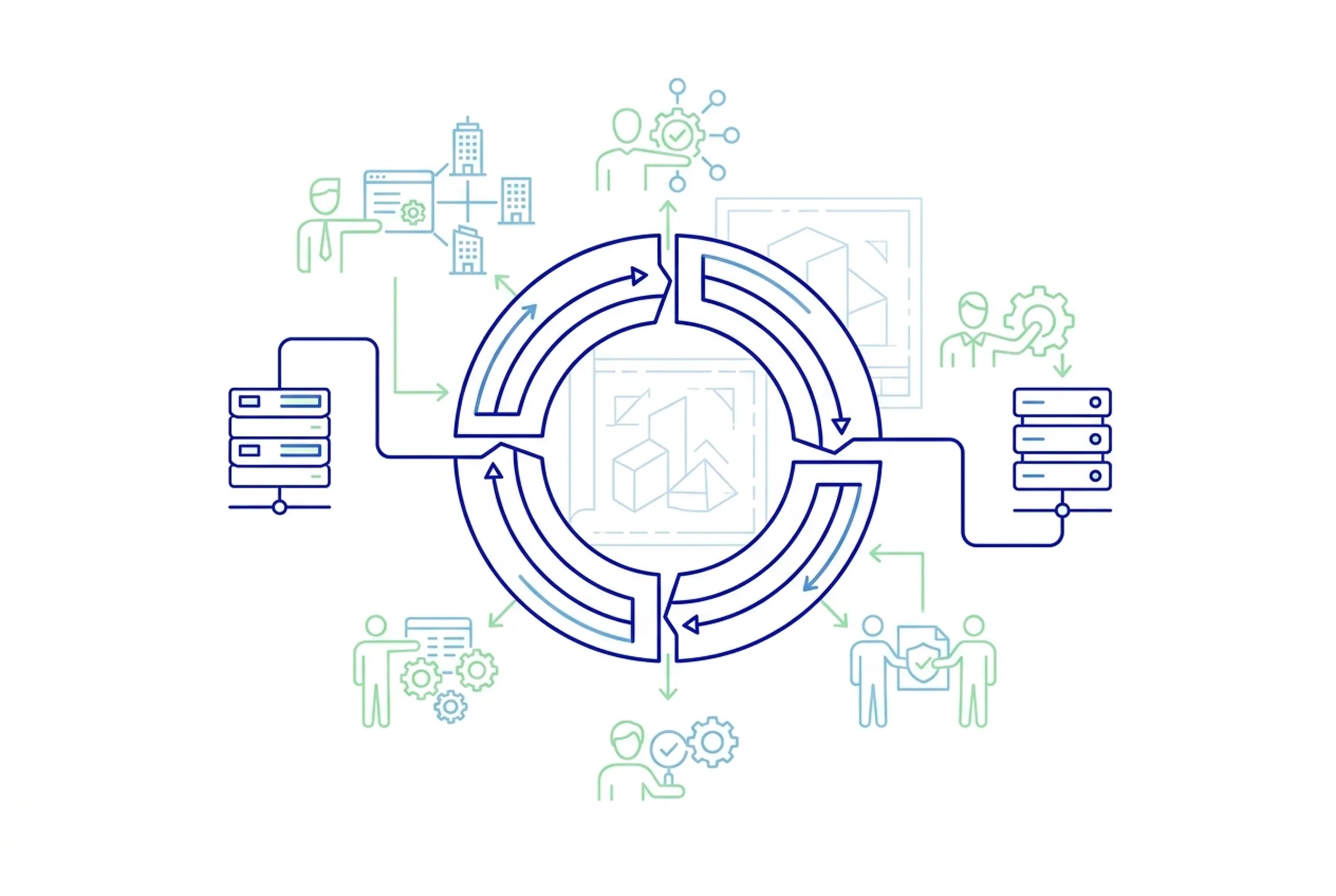 InsightData governance roles in AEC organisationsWho owns what, and how responsibilities are shared.Read the article
Questions data leaders ask

What does data adoption mean in an enterprise?
How effectively employees use data in daily decisions and workflows: not simply accessing it, but relying on trusted data at every level, from frontline teams to executives.
What are the common challenges in data adoption?
Low data literacy, siloed systems that restrict access, lack of trust in data quality, weak leadership alignment, resistance to change and unclear governance.
How can organisations improve data literacy?
Through role-based training, intuitive self-service analytics, standard data definitions and ongoing support that encourages curiosity.
How is data culture maturity measured?
By how widely data is used across departments, the consistency of governance practice, levels of data literacy and how often decisions are led by data.
What role does leadership play?
A critical one: leaders set the vision, use data visibly, align departments, secure investment and help overcome resistance to change.
What is the first step in data adoption and culture enablement?
With a Data Adoption Strategy Consultation, or a review of the organisation’s data culture readiness.
"*" indicates required fields
Your information is used only to reply to this enquiry and is never shared outside BluEnt. Privacy policy